
Struggling with inconsistent stainless steel quality? Costly defects and product failures from carbide precipitation[^1] can erode your profits and reputation. Mastering quench annealing[^2] is the only way to guarantee material integrity.
The most effective way to prevent carbide precipitation is through quench annealing, a process that involves rapidly cooling the steel through its critical sensitization temperature range (425°C-815°C). This rapid quench "freezes" the steel's microstructure, preventing chromium from forming carbides and preserving its essential corrosion resistance.
As the General Manager of AKS, I've seen firsthand how a lack of control in this process can undermine an entire production line. But with the right knowledge and equipment, you can turn this challenge into a competitive advantage. Let's dive into how you can achieve perfect results, every time.
What is quench annealing and why is it important for stainless steel?
Your standard annealing process might be leaving your steel vulnerable to failure. This hidden weakness can lead to catastrophic breakdowns in corrosive environments, damaging your brand's reliability. Quench annealing is the solution that locks in the steel's strongest properties for maximum durability.
Quench annealing is a heat treatment where stainless steel is rapidly cooled after being held at a high temperature. Its importance lies in preventing the formation of chromium carbides, which preserves the steel's corrosion resistance and ensures its structural integrity for demanding industrial use.

In my experience, many manufacturers underestimate the "quench" part of the process. They focus on the heating but neglect the cooling speed. This is a critical mistake. The entire point of heating stainless steel to a high temperature (solution annealing) is to dissolve any existing carbides and create a uniform solid solution. But if you cool it down too slowly, all that hard work is undone. The rapid cooling, or quench, is what freezes that ideal microstructure in place.
The "Solution and Lock" Principle
Think of it like dissolving sugar in hot water. The heat helps the sugar dissolve completely. If you let it cool slowly, sugar crystals will form again. But if you could flash-freeze it, the sugar would remain perfectly dissolved. Quench annealing does the same for the chromium in your steel. It keeps the chromium atoms evenly distributed, ready to form the passive oxide layer that gives stainless steel its "stainless" quality. Without this rapid lock-in, the material simply won't perform as expected, especially in applications like chemical processing tanks, marine hardware, or high-pressure piping where corrosion resistance is non-negotiable.
How does carbide precipitation occur during the annealing process?
Your steel looks perfect coming off the line, but it fails prematurely in the field. Hidden carbides are the silent culprits, forming at the microscopic level and creating invisible weak points. Understanding this "sensitization" process is the first step to preventing it.
Carbide precipitation occurs when stainless steel is held in or cools too slowly through a critical temperature range (roughly 425°C to 815°C). In this zone, chromium atoms bond with carbon, forming chromium carbides at the grain boundaries and depleting the surrounding area of chromium.
This phenomenon is the enemy of high-quality stainless steel. At our facility, we spend a lot of time educating clients about this because it’s a fundamental concept. The metal is made of microscopic crystals called grains. Where these grains meet are called grain boundaries.
The Danger Zone: Sensitization
When the steel cools slowly through what we call the "sensitization range," carbon atoms migrate to these grain boundaries. There, they find chromium atoms and bond with them, forming chromium carbide precipitates. This process effectively steals the chromium from the area immediately surrounding the grain boundary. Because chromium is the element responsible for corrosion resistance, these depleted zones become highly susceptible to attack. The bulk of the steel grain is fine, but the network of grain boundaries becomes a roadmap for corrosion to follow, leading to deep structural failure.
The Role of Carbon and Chromium
The amount of carbon in the steel plays a huge role. Standard grades like 304 have enough carbon to cause significant problems if not handled correctly. The table below shows a simplified view of this relationship.
| Steel Grade | Typical Carbon Content | Sensitization Risk |
|---|---|---|
| 304 | ~0.08% | High |
| 304L | <0.03% | Low |
| 316 | ~0.08% | High |
| 316L | <0.03% | Low |
While using low-carbon ("L" grade) steel helps, it's often not an option due to cost or specific mechanical requirements. Therefore, for standard grades, precise process control is the only reliable way to prevent sensitization.
What are the effects of carbide precipitation on stainless steel properties?
Your products are failing quality control, or worse, failing in the hands of your customers. Corrosion, unexpected cracks, and a drastically reduced lifespan are costing you money and damaging your reputation. Recognizing these effects is critical to solving the root cause.
The primary effect of carbide precipitation is a severe loss of corrosion resistance, specifically a vulnerability to intergranular corrosion. It also reduces toughness and ductility, making the steel more brittle and susceptible to cracking under stress, compromising the material's reliability.
The most dangerous effect is intergranular corrosion. This is an insidious form of attack that follows the chromium-depleted grain boundaries I mentioned earlier. From the outside, the steel surface might look completely fine. But internally, a network of microscopic cracks is spreading, destroying the material's structural integrity from within. By the time you see visible signs, the damage is severe and often irreversible. It’s like having termites in the walls of a house; the structure is compromised long before the paint starts to peel.
Beyond the Surface: Mechanical Integrity
This isn't just about rust. The formation of hard carbide particles at the grain boundaries also makes the steel less ductile and more brittle. This means it can't flex or deform under load as it was designed to. Instead, it's more likely to fracture suddenly. For a component in a high-vibration environment or a pressurized system, this is a catastrophic failure waiting to happen. We've helped many clients diagnose and solve these issues. [Insert anecdote about a client's success in reducing defects]. They were seeing a high rate of field failures and couldn't understand why. A simple analysis showed classic signs of carbide precipitation. By helping them fix their annealing process, we eliminated the problem.
How can quench annealing be optimized to prevent carbide precipitation?
Trying to prevent carbide precipitation can feel like a complex balancing act. Inconsistent results lead to mountains of scrapped material and frustrating production delays. The good news is that optimization comes down to mastering just two factors: precise temperature and rapid cooling.
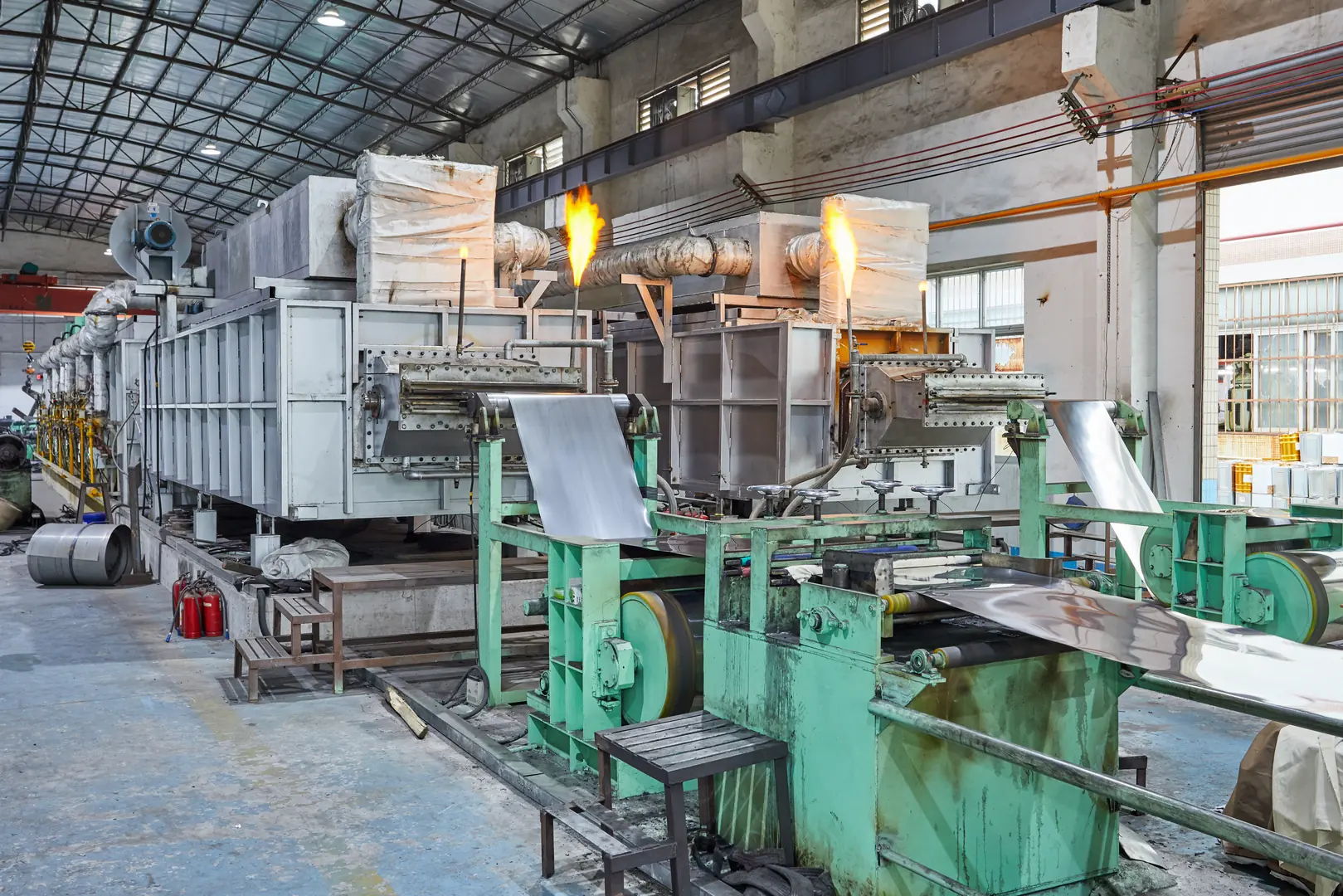
To optimize quench annealing, you must ensure the steel is heated uniformly to the correct solution-annealing temperature and then cooled rapidly enough to bypass the sensitization range. This requires a furnace with precise temperature control (±3℃) and an advanced, high-efficiency cooling system.

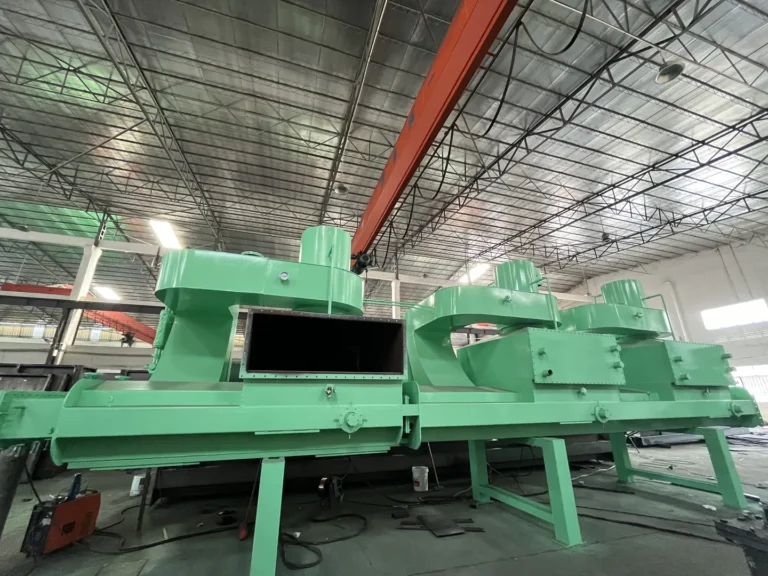
This is where your choice of equipment becomes a strategic decision, not just an operational one. You can't achieve world-class results with average machinery. My team at AKS has engineered our Bright Annealing Furnaces specifically to solve this challenge.
The Power of Precision Temperature Control
First, you need to hit the right solution annealing temperature[^3], and hold it there. If you're too low, you won't dissolve all the carbides. If you're too high, you risk grain growth, which harms mechanical properties. Our furnaces maintain a temperature accuracy of ±3℃. This isn't a luxury; it's a necessity for ensuring the steel is perfectly prepped for the quench.
The Critical Role of Rapid Cooling
Second, you must cool the steel down past the 425°C mark as quickly as possible. This is a race against time. Our furnaces use advanced, precision cooling systems designed for maximum heat extraction. This ensures the steel spends minimal time in the sensitization danger zone. The difference is stark.
| Feature | Standard Furnace | AKS Bright Annealing Furnace |
|---|---|---|
| Temperature Control | ±10-15℃ | ±3℃ |
| Cooling System | Basic Air/Water | Advanced Precision Cooling |
| Carbide Formation Risk | High | Minimal / Eliminated |
| Product Quality | Inconsistent | Consistently High (>99%) |
Investing in this level of precision pays for itself by eliminating defects and ensuring every meter of steel you produce meets the highest standards.
What are the best practices for managing continuous annealing lines?
Your production line suffers from instability, unexpected downtime, and high energy bills. This constant fire-fighting erodes profitability and makes it impossible to meet customer deadlines. Adopting a few key best practices can transform your line from a liability into a reliable, profit-generating asset.
Best practices include using energy-efficient furnaces with proven 24/7 operational stability, maintaining precise atmosphere control (<10ppm O2) to prevent surface oxidation, and implementing a robust, predictable maintenance schedule. This ensures consistent quality, maximizes uptime, and lowers total operating costs.

Managing a continuous line is about creating a stable, repeatable, and efficient process. Over the years, I've found that focusing on the core equipment and its operation yields the best results.
Achieving >98% Uptime
You can't make money when your line is down. Reliability is paramount. Our furnaces are designed for heavy industrial use, delivering over 98% uptime in 24/7 operations. Furthermore, we've engineered them with a maintenance interval of 180 days or more. This means less downtime for repairs and more time for production, directly boosting your output and profitability.
Mastering Atmosphere Control
Preventing carbide precipitation is an internal battle, but you also have to win the external one against surface oxidation. A high-quality bright finish is essential. Our furnaces maintain an incredibly pure atmosphere with an oxygen content of less than 10ppm. This prevents scaling and oxidation, ensuring a bright, clean surface that requires no post-processing. This is a major reason our clients achieve product qualification rates over 99%.
Driving Profitability with Efficiency
Finally, your equipment must be profitable to run. High energy consumption is a major pain point we address. Thanks to our advanced fuel/air ratio controls and dual-layer heat recovery systems, our furnaces consume 10-17% less gas than competing models. For our customers, this translates to a 20-40% reduction in overall energy costs. One client recently reported a 12% increase in annual output and a 25% cut in energy bills after upgrading to our system. That is a strategic win.
Conclusion
Quench annealing is not just a technical step; it's the guardian of your stainless steel's quality and performance. Preventing carbide precipitation is essential, and this is achieved through precise temperature control and rapid cooling. Modern equipment, like the AKS Bright Annealing Furnace, provides the necessary precision to guarantee success.
 English
  Русский