
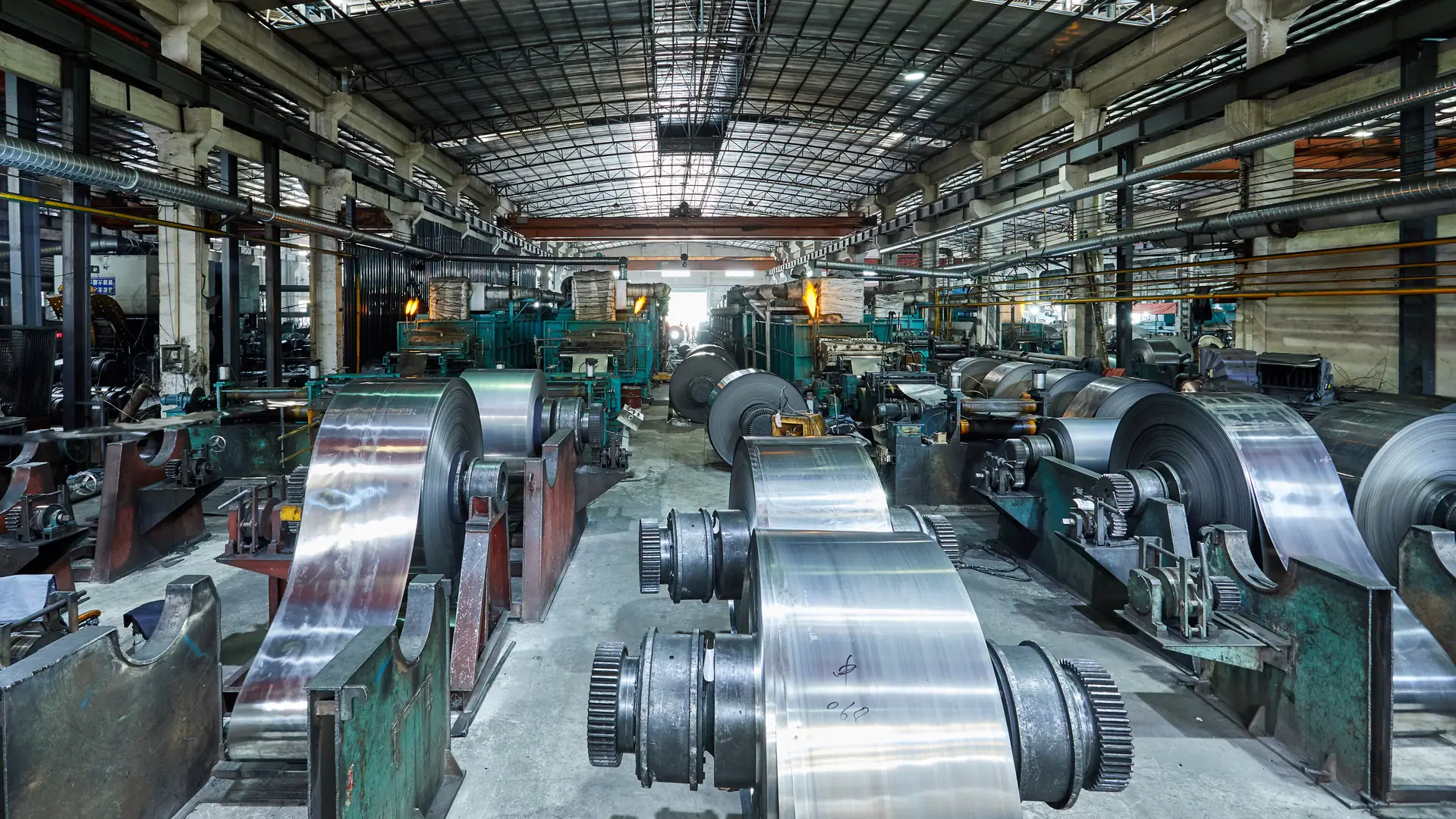
Struggling with inconsistent mild steel properties that hurt your production? This leads to material failures, wasted resources, and unhappy customers. The right heat treatment unlocks the steel's true potential.
Heat treating mild steel fundamentally changes its internal microstructure. This process alters key mechanical properties like hardness, strength, and ductility. The specific outcome depends entirely on precise control over heating temperatures, duration, and cooling rates to achieve consistent, high-quality results.

This transformation is not magic. It is a science my team at AKS has perfected. We build industrial furnaces that give you complete control over this process. So, let’s explore what really happens when you apply heat to mild steel and how you can use it to your advantage.
What changes occur in mild steel during heat treatment?
Do you face unpredictable steel performance in your final products? The hidden changes within the metal's grain structure during heating and cooling are often the cause. We can control these changes.
During heat treatment, the crystalline structure of mild steel, known as its microstructure, rearranges itself. Heating dissolves carbon into the iron matrix, and controlled cooling locks in new structures. This directly and predictably changes the steel's physical and mechanical properties.

Let's dive deeper into this. At room temperature, mild steel has a structure of ferrite and pearlite. It's relatively soft. When we heat it above a critical temperature, this structure transforms into a new phase called austenite[^1], which can dissolve more carbon. The real change happens during cooling. If you cool it slowly, it reverts to a soft, refined structure. But if you cool it quickly, a process called quenching[^2], you trap the carbon and form a very hard, brittle structure called martensite. This is the fundamental principle behind hardening steel. The key to success is absolute precision. Even a small deviation in temperature can lead to an entirely different microstructure and failed parts. That is why our furnaces are engineered for a temperature accuracy of ±3℃, ensuring you get the exact same result, batch after batch.
Why is heat treatment important for mild steel?
Is your raw mild steel too soft for its final application? This common limitation restricts its use. Heat treatment is the essential step to broaden its industrial capabilities and value.
Heat treatment is crucial because it customizes mild steel for specific jobs. It enhances properties like hardness, strength, and toughness, making the material suitable for demanding applications where untreated steel would fail. This process significantly increases the value and utility of the base metal.

The "why" comes down to business results. By modifying the steel's properties, you unlock new markets and applications.
Unlocking Application Potential
Untreated mild steel is fine for basic structural uses, but it cannot handle high-stress or high-wear environments. After heat treatment, it can be used for gears, shafts, tools, and critical automotive components. This opens up higher-margin opportunities for your business.
Improving Manufacturability
Sometimes, the goal is not to make the steel harder, but softer. A process like annealing[^3] makes the steel more ductile and easier to machine or form. This reduces wear on your tooling, speeds up production lines, and lowers your overall manufacturing costs. In my experience, this alone can boost annual production by over 10%. It’s about making the material work for you, not against you.
How does heat treatment affect the mechanical properties of mild steel?
Do you need stronger, tougher, or more flexible steel? The raw material doesn't have it all. But you can precisely engineer these properties through controlled thermal processes to meet exact specifications.
Heat treatment directly manipulates key mechanical properties. Annealing increases ductility and reduces hardness, making steel easier to form. Conversely, quenching and tempering increase hardness and tensile strength, making it more resistant to wear and deformation. The specific outcome is entirely controllable.
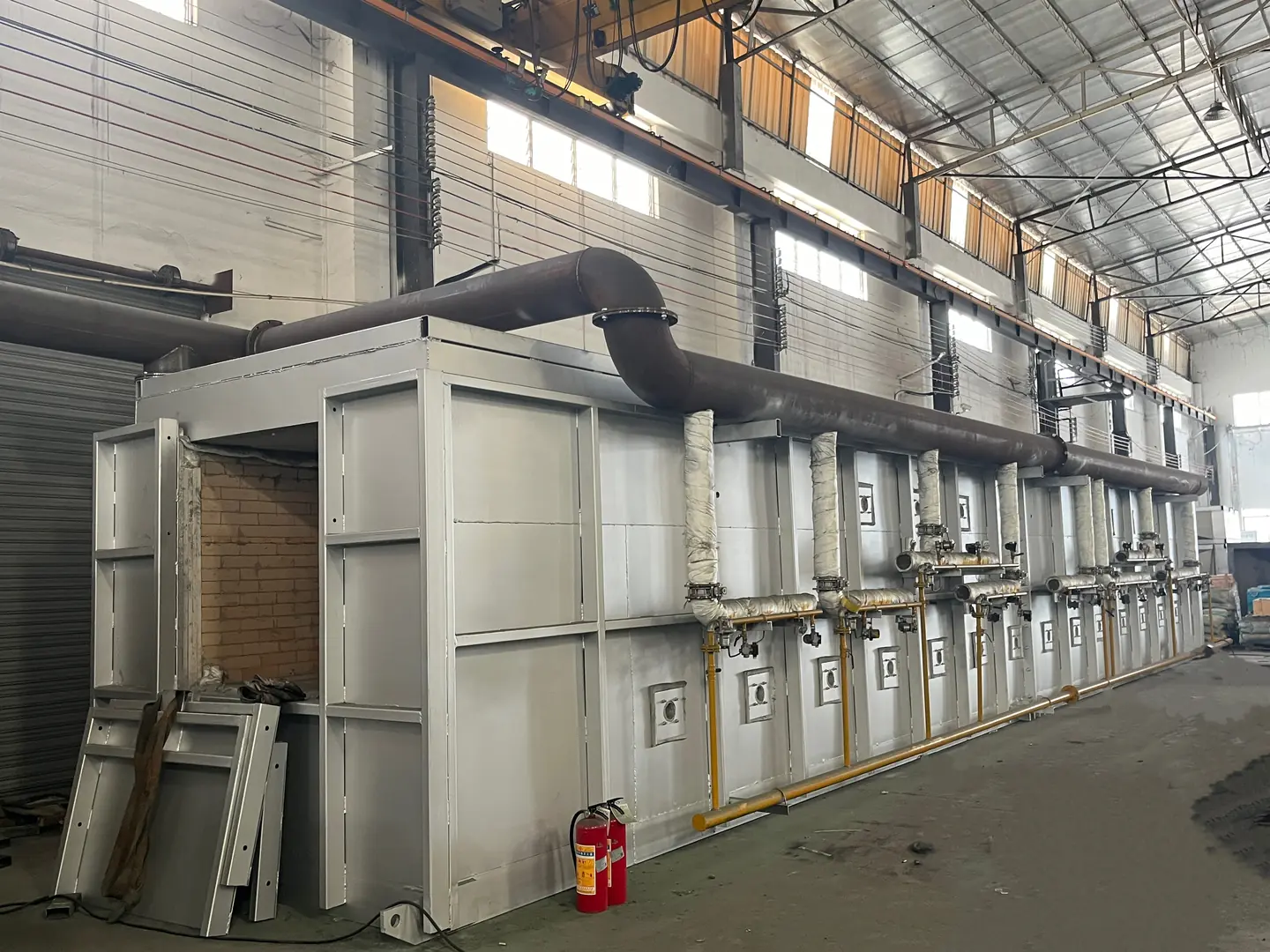
Think of mechanical properties as a set of levers you can pull. You often trade one property for another, so control is everything.
A Balancing Act: Strength vs. Ductility
When you make steel harder, you often make it more brittle. A gear that is extremely hard might shatter under a sudden impact. This is where tempering comes in. After hardening, a secondary, lower-temperature heat treatment is applied to reduce that brittleness and increase toughness. Finding the perfect balance for an application is the goal. It requires a furnace that can deliver not just high heat, but precise, repeatable temperature cycles. This is how our clients achieve product qualification rates over 99%. They can dial in the exact properties they need.
| Property | Effect of Annealing | Effect of Quenching & Tempering |
|---|---|---|
| Hardness | Decreases | Significantly Increases |
| Tensile Strength | Decreases | Significantly Increases |
| Ductility | Increases | Decreases |
| Toughness | Can Increase | Optimized for Application |
What are the common methods of heat treating mild steel?
Confused by terms like annealing, normalizing[^4], and quenching? Each process serves a unique purpose. Understanding them is key to choosing the right one for your production and cost goals.
Common methods include annealing, which softens steel and improves machinability; normalizing, which refines grain structure for uniformity; hardening (quenching), which rapidly cools steel to maximize hardness; and tempering, which reduces the brittleness of hardened steel to improve its toughness.
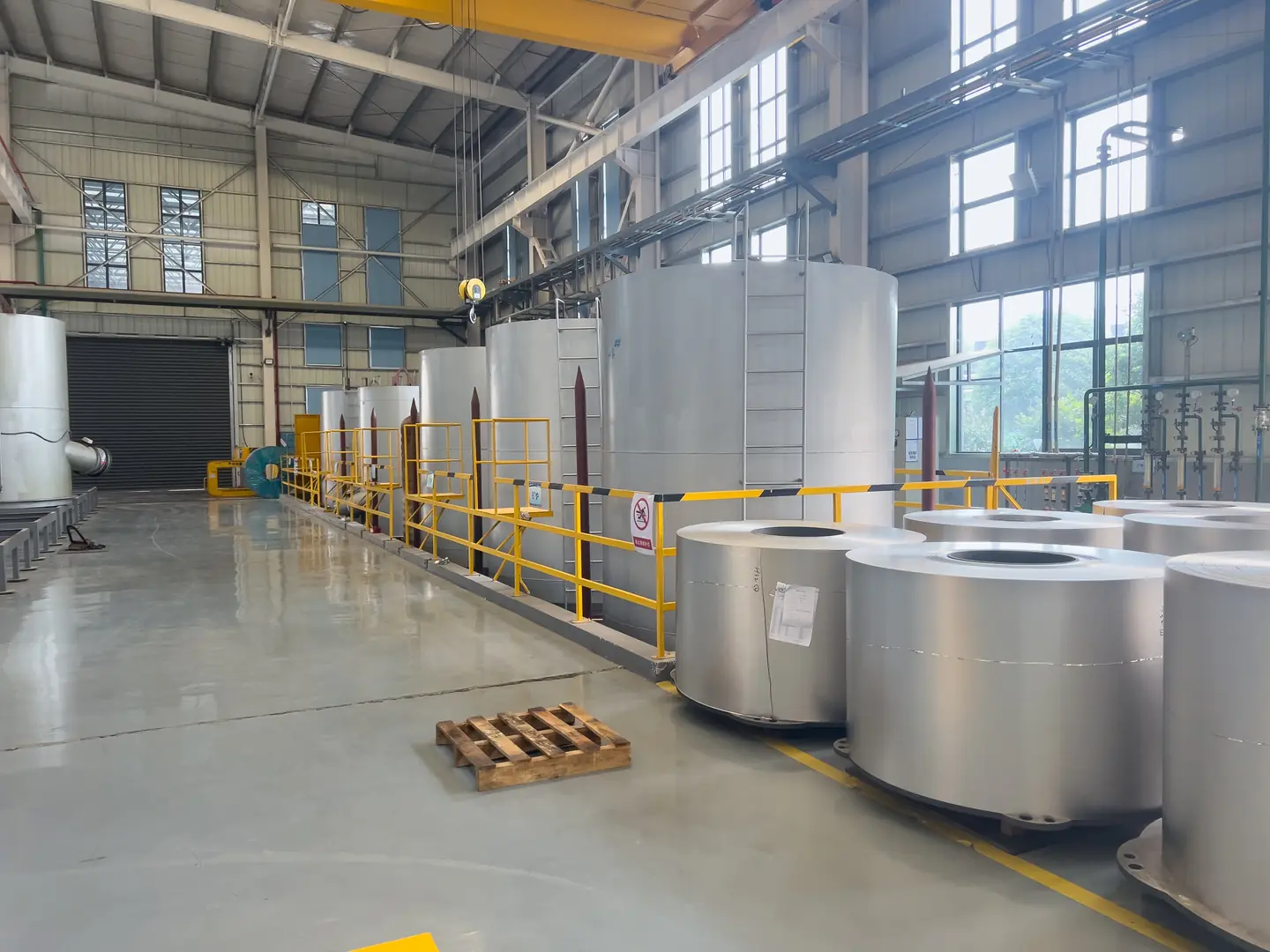
Let's break down these core processes. While they all use heat, their goals are very different.
Annealing for Softness
This process involves heating the steel and then cooling it very slowly. The primary goal is to make the steel as soft and ductile as possible. This is essential for steel that will be heavily formed, drawn, or machined. Our Bright Annealing Furnaces are specifically designed for this. They create a clean, oxide-free surface while maximizing softness.
Normalizing for Uniformity
Normalizing is similar to annealing, but the cooling process is done in open air, which is faster. This results in a structure that is a bit harder and stronger than annealed steel, but more importantly, it creates a very uniform and fine-grained microstructure. This is often done to prepare steel for subsequent hardening.
Hardening and Tempering for Strength
This is a powerful two-step combination. First, the steel is heated and then quenched (cooled rapidly) in water, oil, or air to make it extremely hard. Second, it is tempered by reheating it to a lower temperature to remove brittleness. This pair of processes creates a final product that is both strong and tough.
What best practices should be followed when heat treating mild steel?
Are you getting inconsistent heat treatment results? Small mistakes in the process can lead to big problems like cracking, distortion, and scrapped parts. Following best practices ensures reliable, high-quality outcomes.
Best practices center on precision and control. This includes accurate temperature monitoring, maintaining a controlled furnace atmosphere to prevent oxidation, using appropriate heating and cooling rates, and ensuring uniform heat distribution. Consistency is the most critical factor for success.

From my position as General Manager at AKS, I see companies struggle when they neglect the fundamentals. The solution isn't to work harder; it's to use equipment that makes these best practices automatic.
Precision Temperature Control
Your furnace must hold the target temperature without fluctuation. A part heated to 850°C will have different properties than one heated to 870°C. Our systems maintain a tolerance of ±3℃, eliminating this variable and ensuring every part in a batch gets the exact same treatment.
Atmosphere Integrity
When you heat steel, it reacts with oxygen in the air, creating scale and oxidation. This ruins the surface finish and can even affect the material's properties. Our Bright Annealing Furnaces maintain an atmosphere with less than 10ppm of oxygen. This prevents oxidation entirely, saving you money on costly post-processing steps like acid pickling or grinding. [Insert anecdote about a client's success in reducing defects].
Stable, Continuous Operation
Frequent downtime for maintenance kills productivity. You need equipment built for 24/7 industrial use. Our furnaces are designed for over 98% uptime with maintenance intervals of 180 days or more, because consistent production is just as important as a consistent product.
Conclusion
Heat treating mild steel is not just a process; it is a transformation. With precise control over temperature and atmosphere, you can unlock new levels of performance, boost productivity, and achieve over 99% product quality. This directly improves your bottom line and strengthens your competitive advantage.

 English
  Русский