

Are production bottlenecks and equipment limitations holding your output back? These constraints directly impact your bottom line and ability to compete. High-capacity bright annealing lines[^1] are the solution you need.
Yes, achieving a monthly output of over 10,000 tons with a bright annealing line is absolutely possible. Our AKS lines deliver this capacity through superior energy efficiency, guaranteed uptime of over 98%, and precise process control. This directly translates to higher throughput and lower operational costs.

I've spent my career in this industry, and I see companies hitting a production ceiling every day. They want to grow, but their equipment can't keep up. In this article, I'll break down how we've engineered our bright annealing lines to smash through that ceiling. We will look at the market demands, the technology, and the specific challenges you face, and I'll show you how to solve them.
Why Is There a Growing Demand for High-Capacity Bright Annealing Lines?
Is your current production struggling to meet soaring market demand? This gap means you could be losing contracts and market share. High-capacity lines are now essential for growth and survival.
The demand for high-capacity lines is driven by two things: global market growth and the need for better operational efficiency. Manufacturers must produce more metal products, like stainless steel coils and copper strips, without sacrificing quality. High-capacity lines solve this by boosting throughput and lowering per-unit costs.
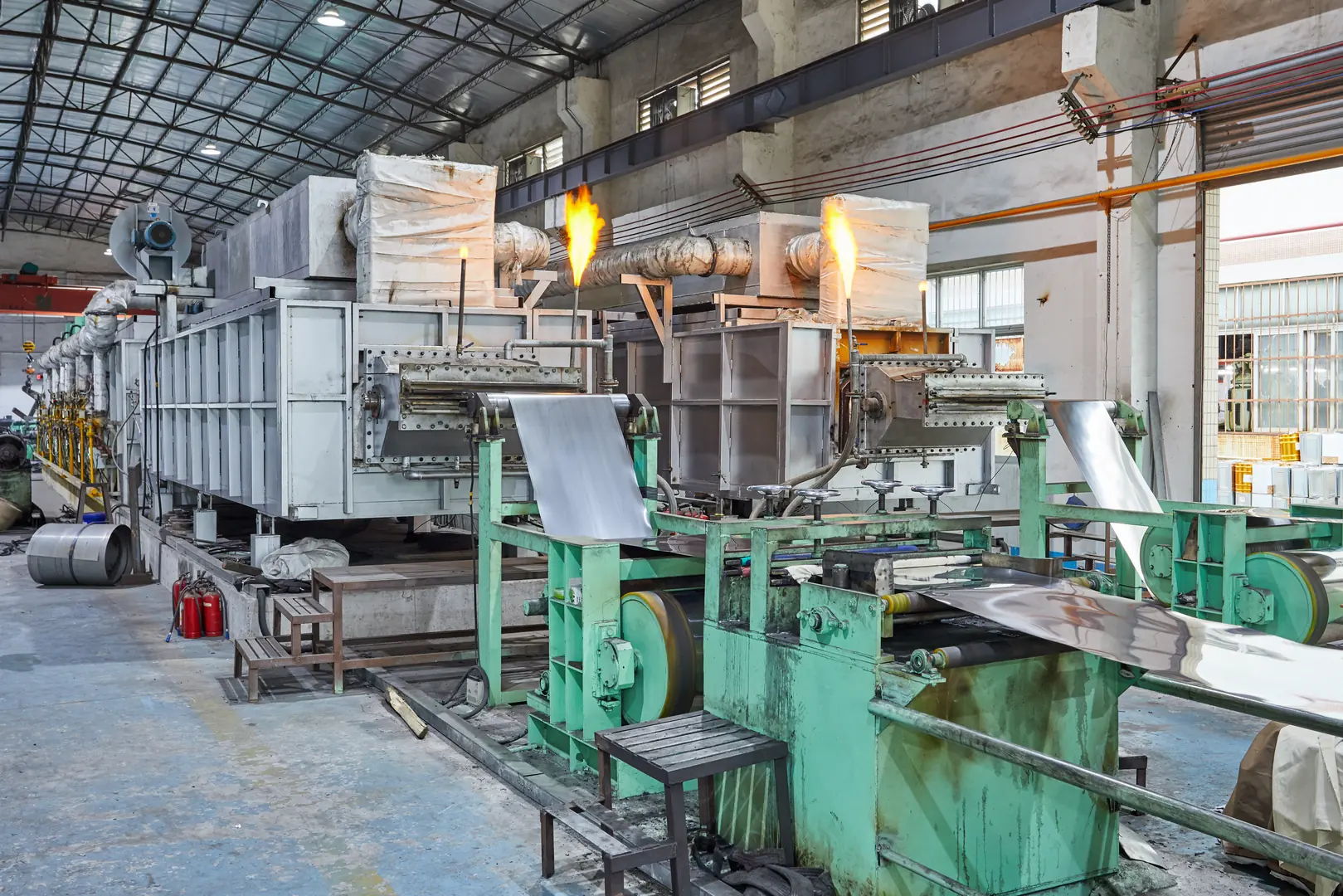
Let's dive deeper into this. In my conversations with leaders across Southeast Asia, India, and Europe, the story is the same. The markets for high-quality stainless steel, brass, and aluminum products are expanding. Your customers need more, and they need it faster. If you can't deliver, your competitor will. This is the core of the demand.
The Economics of Scale
High-capacity lines are not just about producing more; they are about producing more efficiently. When you can process 10,000 tons a month on a single line, your cost per ton drops significantly. You have lower labor costs per unit, a smaller factory footprint for the same output, and better energy efficiency. It's simple economics. A line that runs 24/7 with minimal downtime is a profit center. A line that constantly stops or produces defects is a cost center. That's why smart leaders are moving to equipment that can handle higher volumes reliably.
Securing Your Market Position
Ultimately, investing in high capacity is a strategic move. It allows you to take on larger orders, offer more competitive pricing, and guarantee delivery schedules. This builds trust with your clients and solidifies your position as a market leader. It's about moving from being a reactive supplier to a proactive, dominant force in the industry.
What Are the Current Capabilities and Limitations in Bright Annealing Technology?
Are your older furnaces inefficient and unreliable? This constant battle with high energy bills and unexpected breakdowns is frustrating. Understanding these limitations shows why a technology upgrade is no longer optional.
Standard annealing lines are often limited by high gas consumption, poor temperature uniformity, and frequent maintenance needs. While they perform the basic annealing function, they lack the stability and efficiency required for modern, high-volume production. This directly caps your true output and hurts product quality.
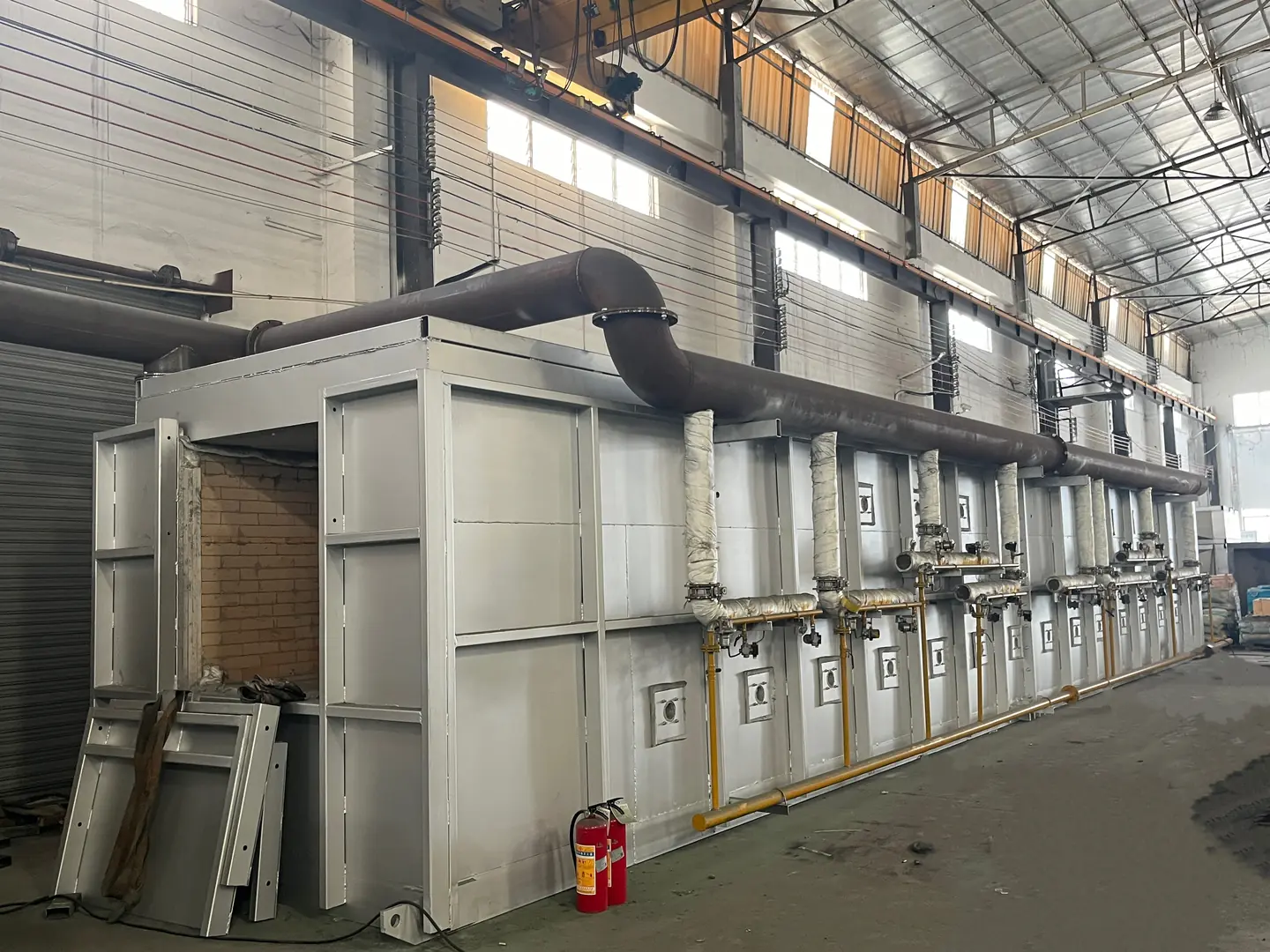
When I visit factories, I often see furnaces that are over a decade old. They were fine for their time, but they can't compete today. The technology has moved on. The core limitations of older equipment create a constant drag on productivity. Let’s break down the differences.
The Old Way vs. The New Way
The contrast between traditional furnaces and modern lines like ours is stark. It's not just a small improvement; it's a fundamental change in capability. We designed our systems to solve the exact problems that older equipment creates.
| Feature | Traditional Furnaces | AKS High-Capacity Lines |
|---|---|---|
| Equipment Uptime | Often below 85% | >98% |
| Energy Efficiency | High consumption | 20-40% lower energy costs |
| Temperature Control | Wide variance (±10℃ or more) | Precise control (±3℃) |
| Atmosphere Control | High O2 levels (>50ppm) | Ultra-low O2 (<10ppm) |
| Maintenance Interval | 30-60 days | ≥180 days |
These numbers tell a clear story. Older technology is a barrier to reaching high capacity. The frequent downtime and wide process variance mean you can't run consistently. The high energy use eats into your margins on every ton you produce. This is why we focused on building a furnace that is both a workhorse and a precision instrument.
What Challenges Do Manufacturers Face in Achieving Higher Productivity?
You want to increase your output, but it feels like you're constantly fighting fires. Unplanned downtime, quality rejects, and high running costs are likely killing your productivity goals.
The biggest challenges are equipment instability that causes unplanned downtime, inconsistent product quality leading to high rejection rates, and excessive energy consumption. These factors create a hard ceiling on productivity that standard equipment simply cannot break through, directly hurting your profitability.

I speak with production managers every week, and their frustrations are real. They have targets to hit, but their equipment is working against them. Let's look at these challenges one by one, because they are deeply connected.
The High Cost of Downtime
Every hour your line is down is an hour you are not producing. With older equipment, unplanned maintenance is a constant threat. A bearing fails, a seal breaks, or a control system glitches. Our focus on building durable lines with maintenance intervals of 180 days or more is a direct response to this pain point. With over 98% uptime, our clients can plan their production with confidence, knowing the furnace will be ready to run 24/7.
The Quality Control Barrier
Nothing destroys productivity faster than defects. When you have poor temperature or atmosphere control, you get oxidation and inconsistent mechanical properties. This means you have to scrap material or sell it at a lower grade. At a volume of 10,000 tons per month, even a 1% rejection rate means 100 tons of lost product. Our precise control systems, which hold temperature to ±3℃ and oxygen below 10ppm, ensure a product qualification rate of over 99%. [Insert anecdote about a client's success in reducing defects]. This consistency is critical for high-volume output.
How Does AKS Technology Address These Productivity Challenges?
You've seen the challenges, and they probably look familiar. You need a real solution, not just a theory. Our technology provides a direct, data-backed path to higher productivity by solving these core issues.
AKS technology directly targets these challenges with systems designed for over 98% uptime and maintenance intervals of at least 180 days. Our precise temperature (±3℃) and atmosphere (<10ppm O2) control delivers a product qualification rate over 99%, while our innovations cut energy costs by 20-40%.

When my team and I started AKS, our goal was not just to build another furnace. It was to solve the biggest problems in heat treatment. We built our technology from the ground up to deliver on the promise of high-capacity, reliable production. Here is how we do it.
Innovation 1: Advanced Fuel/Air Ratio Control
Energy is one of the biggest operational costs in annealing. Traditional systems are wasteful. Our advanced fuel/air ratio control[^2] system continuously analyzes the combustion and adjusts the mix in real-time. This ensures we are always using the absolute minimum amount of gas needed to maintain the target temperature. This is a key reason we can cut gas consumption by 10-17% compared to even modern competitors.
Innovation 2: Dual-Layer Heat Recovery System
Wasted heat is wasted money. Our furnaces feature a dual-layer heat recovery system[^3]. It captures high-temperature exhaust gas and uses it to preheat both the combustion air and the incoming steel strip. This recycling of energy dramatically reduces the total energy required for the process. This, combined with our advanced controls, is how our clients see overall energy cost reductions of 20-40%. This efficiency is essential for making high-volume production profitable.
What Are My Technical Recommendations for Optimizing Your Annealing Process?
So you have the right equipment, but how do you get the most out of it? Without a solid process, even the best furnace will underperform. Follow these practical recommendations to maximize your output.
To truly optimize your annealing process, focus on three key areas. First, create and follow a strict preventative maintenance schedule based on data. Second, continuously monitor your furnace data. Third, make sure your operators are fully trained to use the advanced control systems effectively.

A great furnace is only half of the equation. The other half is how you run it. As part of our technical service, my team and I help clients implement best practices. Here are the most important things you can do to ensure you hit that 10,000-ton-per-month goal.
Establish a Data-Driven Maintenance Plan
Don't wait for things to break. Our systems are designed for long maintenance intervals (≥180 days), but preventative maintenance is still key. Use the data from the control system to track component wear and performance. Schedule your maintenance during planned shutdowns. This proactive approach is what allows you to achieve over 98% uptime. It turns maintenance from an emergency into a predictable, managed task.
Master Your Control Systems
Modern furnaces are powerful because they are precise. Train your operators to understand what the numbers mean. They should be comfortable monitoring the temperature profile, the oxygen ppm levels[^4], and the fuel consumption rates. When your team understands the "why" behind the settings, they can make small adjustments that keep the line running at peak efficiency. This turns your operators from simple machine-minders into process technicians, adding huge value to your operation.
Conclusion
Reaching a monthly output of 10,000 tons is not a dream; it is an achievable engineering goal. It requires moving past the limitations of older technology. AKS furnaces provide the uptime, energy efficiency, and precise control needed to make this level of productivity a reality for your business.
 English
  Русский